
- Home
- encyclopaedia ibiza, encyclopaedia ibiza
- Culture, History and Authentic Ibiza
Your search results

March 17, 2026
Culture, History and Authentic Ibiza
Published on March 17, 2026 by Neverland Properties
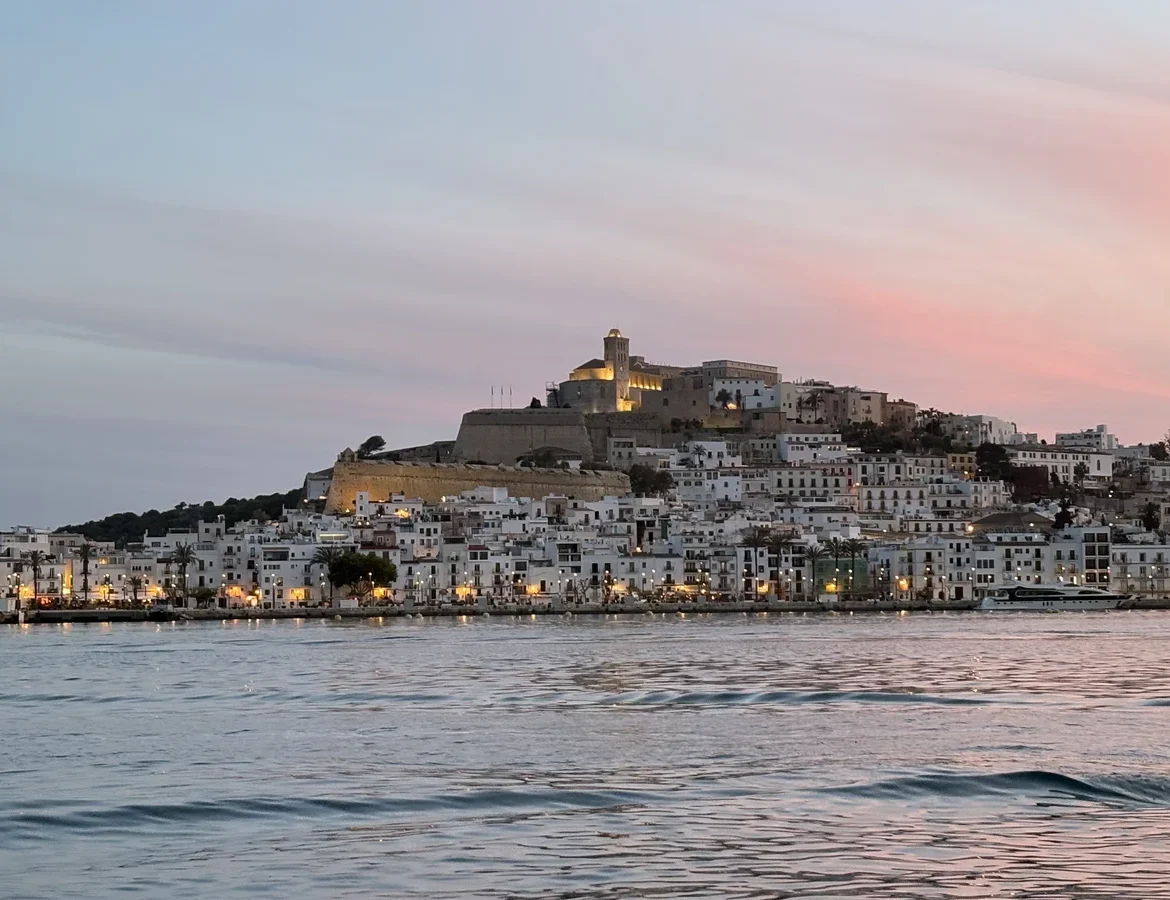
What is Dalt Vila in Ibiza and why is it a UNESCO World Heritage Site?
Dalt Vila is the old town of Ibiza city, enclosed within its ancient walls. Its origins date back to the Phoenician era, around 654 BC, when it was known as Ibossim. Over the centuries, Carthaginians, Punics, Romans and Arabs all left their mark here, the Arabs called it Madina Yabisa, and remnants of their walls can still be found integrated into later construction.
In 1235, the troops of the Crown of Aragon under King James I took the island. That 8th of August is still a public holiday in Ibiza today, commemorating the event.
For many centuries the island suffered repeated pirate attacks, which eventually prompted the construction of the current walls by order of Kings Charles I and Philip II, commissioned to Italian engineer Giovanni Battista Calvi in the sixteenth century. The fortifications proved highly effective in deterring future attacks on the walled city. Their Renaissance design went on to inspire later fortifications, particularly in Spanish settlements in the New World. It is also worth noting that Ibiza had a long tradition of corsairs, commemorated by a monument near the port, privateers who were, in essence, pirates working under royal commission. The acropolis of Dalt Vila also contains, within its walls, a cathedral, several palaces dating from after the sixteenth century, and the castle.
UNESCO recognised this complex on 4 December 1999 as the best-preserved coastal fortress in the Mediterranean, an exceptional example of Renaissance military architecture, a unique interaction between cultural and natural heritage, and a site of extraordinary historical continuity spanning 2,500 years of layered civilisations. The recognition extends beyond Dalt Vila and its walls to include the posidonia seagrass meadows (which merit their own entry), the remains of the Phoenician settlement of Sa Caleta, and the Necropolis of Puig des Molins, the best-preserved Phoenician-Punic necropolis in the Mediterranean.
The story of how this recognition was achieved is worth telling. It began with a local resident. Lluís Llobet, founder of the Dalt Vila Residents’ Association, submitted the first application to UNESCO in 1986. That initial attempt was rejected as insufficient. In the mid-1990s, the Town Hall tried again with a different strategy: rather than presenting only the walled enclosure, they devised a mixed candidacy that combined cultural and historical heritage with natural heritage for the first time. The decisive differentiating element was posidonia, a marine plant whose meadows extend between Ibiza and Formentera. Scientists have established it as the oldest and largest living organism on the planet, at 100,000 years old.
Perhaps the most remarkable aspect of the whole process was the example of political consensus it set. The project was driven by the People’s Party mayor Enrique Fajarnés. After the June 1999 elections, the incoming Socialist mayor Xico Tarrés offered his political rival the chance to continue leading the candidacy as commissioner, so that the change of government would not disrupt the work. The two travelled together to Marrakech, where on 4 December 1999 the UNESCO assembly granted the recognition. Fajarnés summed it up with a line that resonates more powerfully today than ever: “That was one of the keys. Going together. I wish so many more things could be handled with such consensus.”
Read more
What is the authentic side of Ibiza beyond the clubs and beaches?
Rural Ibiza
Authentic Ibiza is, above all, a rural island. A landscape scattered with whitewashed farmhouses and dry-stone walls that define the interior with an austere, singular beauty. Being an island of pine trees, a species ill-suited to cultivation, its inhabitants spent centuries building terraces into hillsides to win back arable land. Walk through the forests today and you will find those walls in ruins, silent witnesses to a hard way of life. People scraped by for many centuries and even suffered famines. One of Ibiza’s deepest characteristics is precisely this: everyone lived dispersed across the island, far from concentrated urban centres, in isolated farmsteads surrounded by fields and pine woods.
The interior is a landscape of hills that repeats with a hypnotic continuity, best appreciated from the island’s various high points. What differentiates the scenery most is the coastline, and in the interior it is above all the red, more fertile soil of the north that stands out. The inland villages each have their own character: Santa Gertrudis offers local life year-round, with its terraces, galleries and square as a permanent meeting point; San José has a lively summer atmosphere. Each in its own way is part of the charm of the most authentic Ibiza.
Historically, the island’s main industry was not agriculture but salt. The Ibiza saltpans were for centuries the island’s most important source of wealth, a strategic resource in the Mediterranean that attracted Phoenicians, Carthaginians and Romans alike, and that remained the island’s economic engine until the arrival of tourism.
The countryside was abandoned as tourism took hold, drawing away the agricultural workforce and allowing the pine trees to reclaim the land. Fortunately, there is now a renewed will, both from public authorities and private initiatives, to recover this agricultural heritage. Many farms have embraced efficient, organic farming that is bringing new life back to the Ibizan countryside.
Cultural and Intellectual Ibiza
When leisure tourism began in the early twentieth century, Ibiza started to be discovered by European artists and intellectuals who found in the island a light, an architecture and a way of life unique in the Mediterranean. Sorolla visited in 1919 and painted The Smugglers here, one of his most celebrated works. Walter Benjamin lived in Ibiza on two lengthy stays in 1932 and 1933, fleeing Nazism, and wrote some of his most lucid texts here.
Around the 1950s and 60s a high-quality international artistic movement took shape. In 1959, artists living on the island founded the Ibiza 59 Group, among them Erwin Broner, Erwin Bechtold, Hans Laabs, Heinz Trökes and Antonio Ruiz, a collective of abstract vanguardists that proved a genuine catalyst in the island’s artistic scene. Their work, and that of the artists who followed, now forms the permanent collection of the Museu d’Art Contemporani d’Eivissa (MACE), the third oldest public museum of contemporary art in Spain, opened in 1969. Rationalist architecture also left an indelible mark. Figures such as Josep Lluís Sert and Erwin Broner studied and reinterpreted Ibiza’s vernacular architecture, influencing the international modern movement. Broner’s house, declared a Listed Building and constructed in 1960 in the Sa Penya neighbourhood, is open to visitors.
A special and little-known visit is the Espacio Micus, a singular gallery housed in a traditional farmhouse near Jesús that the German painter Eduard Micus transformed in 1972 into his home and studio, and which has operated as an exhibition space open to the public on Sunday mornings since 1989. A place where art, architecture and Mediterranean light coexist in an unrepeatable way.
Traditional Ibizan gastronomy is also part of this authentic identity and deserves its own exploration.
What to Visit
For those wishing to explore this deeper Ibiza, the Phoenician settlement of Sa Caleta and the Necropolis of Puig des Molins offer a fascinating window into the island’s origins and tend to delight children too. In Santa Eulalia, the Ethnological Museum of Puig de Missa reveals the tools and implements of rural life, including the traditional craft production of espardenyes. In Dalt Vila, alongside the MACE, the Museu Puget brings together the work of two generations of painters, Narcís Puget Viñas and his son Narcís Puget Riquer, key figures in early twentieth-century Ibiza. The Cathedral also has its own museum.
For a day trip into the interior, visiting the whitewashed churches provides an organic, unhurried way to explore the island’s villages. Es Cubells, San Agustín, San Rafael and San Lorenzo are unmissable stops. A special mention goes to Balàfia, a unique rural ensemble of several farmhouses grouped around two medieval defensive towers, one of the most genuine and best-preserved corners of the island.
Read more
What is the history of Ibiza and how has it shaped the island today?
To understand Ibiza, it helps to start with its name. The island was called Ibossim in the Phoenician era, then Ebusus under the Romans, Yabisa under the Arabs, and today it is officially Eivissa in Catalan and Ibiza in Spanish and internationally. The Pitiuses, the collective name for Ibiza and Formentera, derives from the Greek word for pine trees, which cover the island. Each name is a layer of history.
The Phoenicians established the first permanent settlement around 654 BC, first at Sa Caleta and then on Puig de Vila, the hill that Dalt Vila occupies today. They recognised in the island a strategic point in the western Mediterranean, an ideal location for trade and, above all, for salt, which would remain the island’s principal source of wealth for centuries. From that era comes one of Ibiza’s most enduring legacies: the goddess Tanit. A Carthaginian deity of fertility and the moon, her cult spread across the entire island, and the largest sanctuary dedicated to her in the whole Mediterranean is found at Cova des Culleram, in Sant Vicent de sa Cala. More than 1,600 terracotta figurines were discovered there. Today Tanit remains very much alive on the island: it is a woman’s name, appears in logos, shops and artworks, and her figure continues to be a natural, living symbol of Ibizan identity.
After the Phoenicians came Carthaginians, Romans, Byzantines, Vandals and Arabs. Each civilisation left its mark, but it was the Arab period that gave the island its most lasting urban form, with Madina Yabisa as the political and military centre, and the great mosque where the cathedral now stands. In 1235 the troops of the Crown of Aragon took the island, beginning a new chapter shaped by Catalan culture and by centuries of pirate raids that culminated in the construction of the Renaissance walls of the sixteenth century.
During the following centuries the island lived in relative isolation. People scraped by, dispersed across the countryside in isolated farmsteads, farming terraced hillsides of dry-stone walls on ungenerous land, and depending on the saltpans as the main economic engine. A hard life that forged a distinct character: pragmatic, self-sufficient, discreet, with a natural tolerance towards the outsider who doesn’t ask where you come from or what you do here.
That openness is perhaps the key to everything that followed. From the 1930s onwards, the first European artists and intellectuals began to arrive, fleeing authoritarian regimes and the pre-war atmosphere on the continent. Walter Benjamin, Raoul Hausmann and others found in the island a primitive, tranquil Arcadia. In the 1950s and 60s came the Ibiza 59 Group and with it a first-rate international artistic movement. And then came tourism.
The tourist boom of the 1960s transformed the island radically and very quickly. With it came the hippies, young Americans fleeing the Vietnam War and Europeans searching for freedom, who found in Ibiza a place that did not judge. There is something revealing in the anecdote an older Ibizan friend once told me: during the Franco years, she and her friends would go to the airport simply to watch how the tourists were dressed. The diversity gave them a lift on an island that until then had lived with its back to the outside world. The elegance and extravagance of those women stepping off planes were an absolute novelty for a community used to seeing only itself. And the curious thing is that Franco seemed to look the other way at the image of freedom Ibiza projected to the outside world. The island functioned as a pressure valve, a permitted anomaly in the Spain of the time.
From that encounter between the pragmatic islander and the bohemian outsider something genuine was born. The Adlib fashion movement, the hippy markets, a living craft tradition, a gastronomy that absorbed influences without losing its roots. And in the 1980s and 90s, when electronic music found its global laboratory in the Ibizan clubs, the island again became the place where something new was beginning. Amnesia, Pacha, Es Paradís and later Space became temples of club culture, and Ibiza became the world capital of dance music, a status it holds today with full conviction.
What connects all these episodes is a single thread: the island’s capacity to welcome the different without losing the essential. The peasant farmer struggling on his land, the goddess Tanit engraved in collective memory, the German artist who arrived in flight, the hippy who stayed, the DJ who turned the small hours into ritual. All of them found their place here. That is Ibiza.
Read more
What are the best cultural experiences during a luxury villa holiday in Ibiza?
The answer depends on the profile of the group and the time of the season, because Ibiza offers very different cultural experiences depending on who they are aimed at and when you visit. The island is far more than beaches and nightlife: it has a first-rate cultural programme that many visitors never discover.
For lovers of contemporary art, the Ibizan summer has two standout events. The first is La Nave Salinas, a former industrial salt storage warehouse from the 1940s converted into an exhibition space since 2015, set within the Ses Salines Natural Park. Each season it hosts a solo show by a major international artist, with installations designed specifically for this singular space. The second is CAN Art Fair (Contemporary Art Now), an invitation-only contemporary art fair held each June in Ibiza that has established itself in just a few years as one of the most significant summer art market events in Europe. Galleries from New York, London, Tokyo and Berlin converge on the island for a few days that have given rise to what is now known as Ibiza Art Week. The cultural programme varies considerably by season, something worth bearing in mind when planning a stay.
Dalt Vila, beyond being a monument, is a living cultural venue throughout the year. The Town Hall organises theatrical guided tours of the historic quarter every Saturday, an entertaining way to discover its history for all ages. In May, the International Music Summit, the global congress of electronic music, holds its grand closing concert within the Renaissance walls, an experience that fuses heritage and contemporary culture in a unique way. And in August, the Ibiza Jazz Festival has for decades transformed the Santa Llúcia bastion into one of the most magical stages in the Mediterranean. Walking the perimeter of the walls, passing through all seven bastions, each offering different views of the sea and the city, before getting lost in the cobbled lanes up to the main square is, in itself, an experience that needs no special event to justify it.
For those travelling with children, the cultural offer is richer than many imagine. The new interpretation centre at Sa Caleta, the seventh-century BC Phoenician settlement, has gained considerable interest in recent years. But if there is one experience that has become unmissable for families with children, it is BIBO Park, the Ibiza Botanical Biotechnological Park, located in San Rafael on the main road between Ibiza and San Antonio. With more than 30,000 plants from 160 species, including several endemic to the Pitiuses, the park combines botany, ecology and cutting-edge technology in a way that captivates children and adults alike. Its star attraction is the plant piano, unique in the world, where each key is a living plant that produces music and light when touched.
For those seeking more intimate and lesser-known experiences, Espacio Micus, the gallery of German painter Eduard Micus in a traditional farmhouse near Jesús, opens on Sunday mornings and offers one of the most genuine encounters with Ibizan art and architecture. The MACE in Dalt Vila always rewards a visit with its permanent collection of the Ibiza 59 Group. And the Las Dalias market, with its hippy history, its crafts and live music, is a cultural experience in its own right and deserves its own dedicated entry.
For lovers of gastronomy and wine, a highly recommended visit is to the northern interior of the island, specifically Sant Mateu, the heart of Ibiza’s winemaking tradition. Wine production in the Pitiuses dates back to the Phoenicians and today enjoys internationally recognised quality under the Ibiza Vi de la Terra designation. Sa Cova, the island’s oldest winery, offers guided visits with tastings of four wines and local tapas, by prior reservation. Can Rich, in Buscastell near San Antonio, is the island’s only organic winery and offers visits Monday to Friday with a tasting and local produce aperitif. Ibizkus, in Santa Eulalia, is the island’s largest exporting winery and also offers tastings on its terrace overlooking the vineyards. All three connect visitors to the most rural and authentic Ibiza, far from any conventional tourist circuit.
Read more
What is the traditional food of Ibiza and when can you try it?
Traditional Ibizan cuisine is Mediterranean at heart, but with a personality of its own that sets it clearly apart. It is a cuisine of scarce resources and great ingenuity, inherited from generations who scraped a living from the sea and the land, where nothing was wasted. Today that same cooking, made with ingredients of exceptional quality, is the reason people keep coming back to the island.
The sea takes centre stage. The fresh fish that arrives daily at Ibizan ports, brought in by the traditional wooden llaüts, is of a quality that is hard to match. The centrepiece of the maritime tradition is bullit de peix, a stew of rock fish such as grouper, scorpionfish or John Dory, served with local potatoes, whose broth is then used to make arroz a banda with alioli. Guisat de peix is its heartier version, enriched with almonds and saffron. Borrida de rajada, a medieval-rooted ray stew with almonds, is one of those dishes not always found on menus but well worth seeking out. Among the seafood not to be missed: the red prawn, fished at 600 metres depth in the waters off Ibiza and Formentera, best served simply grilled with coarse salt; and lobster, the key ingredient in one of the island’s most celebrated rice dishes.
Rice dishes deserve special mention. Arroz a banda is the most distinctly Ibizan, but paellas and soupy seafood rices, made with the island’s fresh fish and shellfish, are one of the great joys of eating in Ibiza by the sea. Although not originally native to the island, the quality of the local produce gives them a dimension of their own that makes them worth seeking out at coastal restaurants.
From the land come dishes of celebration and feast. Sofrit pagès, a mix of chicken, lamb and pork with sobrasada, butifarra and potato, is the dish that never missed a wedding or a village saint’s day. Arroz de matanzas is another dish that connects directly to the island’s most ancient traditions. In December, when the pig slaughter took place, the whole family would gather to make the cold cuts that would supply the year, and on that very day this rice was cooked with fresh meat, milk cap mushrooms and sobrasada. A celebration in itself, still found in some restaurants today. Squid stuffed with sobrasada, that most Ibizan of sea-and-mountain combinations, is another essential reference.
Among the island’s own products worth knowing: the red potato, with its dark skin and yellow flesh, the base of many traditional dishes; Ibizan sobrasada, made from the annual pig slaughter; the red prawn already mentioned; and peix nostrum, the label guaranteeing fish caught by the local fleet. Ibizan honey holds Protected Designation of Origin status, olive oil holds Protected Geographical Indication status, and the island’s herbes ibicenques liqueur has held its own PGI since 1997.
The pastry tradition deserves a chapter of its own, reflecting the island’s cultural blending of Arab and Christian roots. Flaó is a fresh goat’s cheese tart with mint, the most representative and exotic of Ibizan sweets, once made exclusively for Easter Sunday but now found year-round in bakeries and restaurants. Greixonera is a pudding made from ensaimadas, cinnamon and lemon zest that melts in the mouth. Orelletes, ear-shaped fried pastries made the eve of village fiestas, and buñuelos, present at every celebration, complete a confectionery tradition that has much of collective ritual about it.
To close a meal: herbes ibicenques, that amber liqueur made from up to seventeen aromatic plants from the island’s forests, each family’s recipe passed down through generations. And café caleta, a kind of Ibizan queimada made with coffee, rum, brandy, citrus peel and cinnamon, invented a century ago by a fisherman from the Sa Caleta coast and today a familiar finale to a good meal in many of the island’s restaurants.
Read more
What are the most interesting villages to visit in the Ibiza countryside?
Exploring the inland villages of Ibiza is one of the most authentic experiences the island has to offer. Each has its own character, and a tour of their whitewashed churches is also an organic way to discover the Ibizan rural landscape.
The churches are worth paying attention to. All of them are a natural extension of the vernacular farmhouse architecture: thick whitewashed walls, absolute simplicity, no ornamentation. Many appear fortified because they were, built to withstand the pirate raids that plagued the island for centuries. They are the centre of each village and the best starting point for any visit.
Es Cubells deserves a special stop. Its church has a viewpoint from which one of the most spectacular views of the entire Ibizan coast can be enjoyed.
San Agustín has a singular spirit, one of those places where time seems to have stopped. Opposite its church, the restaurant Can Berri Vell completes a scene that is difficult to forget.
San Rafael surprises with the Ibizan houses that surround its church, forming one of the most photogenic rural ensembles on the island.
San José is more a service village than a destination in itself, pharmacy, administrative tasks, everyday shopping. But its church is lovely and worth a brief stop. It is the reference point for those staying in the south of the island.
Santa Gertrudis has evolved considerably in recent years and is now one of the most enjoyable villages to visit, with a varied offer of shops and restaurants. An essential stop is Cas Costa, a very Ibizan bar that has managed to stay the same over the years, faithful to its spirit and its regulars, without surrendering to trends.
San Juan is the reference village for those staying in the north. On Sundays it hosts a market with a genuinely northern spirit, quieter and more artisan than those in the south, frequented mainly by residents and visitors looking for an Ibiza well away from mass tourism.
Santa Eulalia is already a small city. Its old quarter deserves a visit, presided over by the church of Puig de Missa, one of the most beautiful on the island. With luck, you may arrive as a wedding ends and witness the ball pagès in the square, one of those spontaneous, unrepeatable spectacles that define the most authentic Ibiza.
Ibiza city also deserves a morning of walking, shopping and terrace-sitting, with Dalt Vila as backdrop. It is covered in detail in its own entry in this encyclopaedia.
San Antonio deserves a more nuanced look. The bay of Portmany is naturally one of the most beautiful on the island, and it was precisely that which attracted the mass tourism of the 1960s and 70s. The large buildings that surround it today are testimony to that unplanned development. However, the town is transforming: the renovated seafront promenade offers one of the most spectacular sunsets in the Mediterranean, and urban artist Okuda San Miguel has intervened in the West End with a multicoloured public art trail that is changing the neighbourhood’s image. For families with children, the Aquarium Cap Blanc, set inside a natural cave where fishermen once kept lobsters, is a charming visit, with sardine barbecues on Friday and Saturday summer evenings.
But if one village is to be chosen for ending the day with the certainty of having found the most genuine Ibiza, that village is San Carlos. Bar Anita, with its original mailboxes where locals still collect their post and its homemade herbes ibicenques, is one of those places that sums up in a single glass everything that makes this island special. And next door, Las Dalias is waiting for next Saturday.
Read more
What is the hippy market Las Dalias and when does it take place?
It all began on 4 November 1954, the feast day of Sant Carles, when Joan Marí Juan, a local farmer and carpenter, opened a roadside bar on an unpaved track, built with his own hands and in secret. He gave a different answer every day to anyone who asked what he was building. That bar became the north of the island’s dance hall, the place where local farmers celebrated weddings, baptisms and fiestas. It was so successful that the parish priest of Sant Carles began showing films at the church to compete with it and keep his flock away from the sinful dancing.
In the 1960s, with the arrival of tourism, Joan negotiated with tour operators to organise barbecues with flamenco shows. In the 70s, the hippies living in the north of the island began gathering here after the Punta Arabí markets, creating legendary jam sessions with international artists passing through Ibiza. Joan’s son Juanito took over at the age of 23, and on Valentine’s Day 1985, with five stalls in the garden and the collaboration of British gallery owner Helga Watson-Todd, the market was born. A year later there were already 50 artisans. Some of them, and their children, are still there today.
Today Las Dalias attracts 35,000 people per week at peak season and is one of the most recognised hippy markets in the world. A family business with peasant farmer roots that, as Juanito proudly says, there are few left like on the island. People have come to buy it. It is not for sale. It is a legacy belonging to Sant Carles and to the whole of Ibiza.
But Las Dalias is much more than the Saturday market. Its music programme has a quality all its own, with concerts by leading artists. And the Akasha room, intimate, full of character, with an energy very different from the big clubs of Playa d’en Bossa, is an option for those looking for Ibizan nightlife without the mass tourism. For connoisseurs. The atmosphere created here is hard to find anywhere else on the island.
Las Dalias is open year-round in various formats. The Saturday market runs from 10am to 8pm throughout the year. In summer, night markets are added on Mondays, Tuesdays in July and August, and an art market on Sunday afternoons. The music programme fills Thursdays, Fridays and weekends with a wide variety of events. Las Dalias is not visited. It is lived.
Read more
What local artisans, shops or galleries in Ibiza are worth visiting?
Ibiza has always drawn creators. The combination of light, freedom and cultural diversity has generated over decades a craft and design ecosystem with no equal in the Mediterranean. Knowing where to find it is part of truly knowing the island.
The starting point is Las Dalias, though not only for its markets. The selection of artisans who are granted a stall is rigorous: not just anyone gets in. What is sold here has passed through a filter of authenticity that sets Las Dalias apart from every other market on the island. For more on its timetables and programme, see the dedicated entry.
In summer, the village markets offer another dimension of local craftsmanship. The one in San José, held on Saturday mornings in the village square, is one of the most cherished. Here you can find hand-made espardenyes, the traditional peasant footwear of esparto grass and canvas, documented as part of the island’s intangible heritage by the Ethnological Museum of Puig de Missa, brightly coloured ceramics rooted in the Ibizan tradition, basketwork and local produce. The Sant Joan de Labritja Sunday market has a more intimate and local character, with artisans working on their pieces in front of the buyer.
In the world of design, Ibiza has produced names of international reach without losing their connection to the island. Adlib fashion, born in 1971 on the initiative of Princess Smilja Mihailovitch as a platform for local talent, remains the frame of reference today. The designer who best embodies its evolution towards contemporary luxury is Charo Ruiz. Born in Seville, she arrived on the island in the late 1970s when Ibiza was still a bohemian refuge, starting out selling garments near Salinas beach. In 1989 she founded her own label. Today, with over sixty collections and a presence in more than twenty countries, her cotton voile dresses with guipure lace are the most recognisable symbol of Ibizan fashion in the world. She designs and makes them on the island. Beyoncé, Naomi Campbell, Queen Letizia and Michelle Obama wear them.
In jewellery, the reference is Elisa Pomar. The family has been practising the craft since 1852, and Elisa, the fourth generation, took over the family business to launch her own label in 2008, which was soon awarded the Gold Medal of the Consell d’Eivissa. Her pieces draw on the traditional peasant filigree and Phoenician motifs, diamonds, flowers, silver and gold worked by hand in her workshop, and reinterpret them with a contemporary sensibility. In 2025 she closed her historic shop on Calle Castelar in the La Marina neighbourhood, where she was literally born, in the family flat upstairs, to open a new space on Vara de Rey. There she also has Argenteria, a second premises dedicated exclusively to silver, a metal with deep roots in the Ibizan tradition that Elisa champions with the same passion she brings to gold.
World Family Ibiza is something else altogether, a beautiful story. Merel, Dutch, and Alok arrived on the island from opposite ends of the world, they met at a drumming concert on Benirrás beach, and decided to stay. Since 1999 they have been hand-making bags, accessories and one-of-a-kind garments with fabrics and embroideries brought back from their travels through Morocco, Afghanistan, Uzbekistan, Thailand and Mexico. No two pieces are alike. Today it is a family enterprise: alongside them work their six children, Goldie, Carlota, Asher, Rama, Gaya and Karuna, each with their own role. They have a boutique in Sant Joan de Labritja and a presence at Six Senses Ibiza. They are not from here originally, but today they are part of the island. That, too, is Ibiza.
Read more
What is the Es Vedrà rock formation and what makes it special?
Some places need no introduction. Es Vedrà is one of them. This 382-metre islet rises from the sea off Cala d’Hort on the island’s south-west coast, like a limestone pyramid that seems not quite to belong to this world. It is the most visually recognisable symbol of Ibiza after Dalt Vila, and for good reason: at any hour of the day, in any season, it offers a different spectacle of light and colour. The rock changes with the clouds, with rain, with the low winter sun. Some of the most striking moments are not the sunset itself, but seeing it appear suddenly around a bend in the road, or watching storm clouds pass over it while the light transforms it into something almost unreal.
Es Vedrà belongs to the Cala d’Hort Natural Park and has been a nature reserve since 2002. Access to the islet is by sea only and requires a permit. What one cannot do is drive up, park in front of the viewpoint and call that seeing it. The fashion for sunsets at Es Vedrà, amplified by social media, has turned that viewpoint into a point of congestion that has little to do with the real experience of the islet and creates significant pressure on a protected natural environment and on local residents. Es Vedrà deserves better.
The islet’s most curious story has a name: Francisco Palau, a Catalan Carmelite friar who was exiled to Ibiza in 1854 for political reasons. Once on the island, he began making spiritual retreats on Es Vedrà, living in a cave, drinking water that filtered through the rock, and receiving provisions by sea. Palau documented his experiences, which included visions he described as apparitions of ladies of light. He remains the only person ever to have inhabited Es Vedrà. His figure, later beatified by the Church, was the seed of all the legends that surround the islet.
Since the Middle Ages, several Ibizan families used Es Vedrà to raise goats, which grew semi-wild, defying gravity on its sheer walls. It was a tradition passed down through generations. In 2016, the Balearic Government decided to eradicate them in order to protect the islet’s endemic flora, including Santolina vedranensis, a species found nowhere else on Earth. Unable to capture them alive given the terrain, the decision was taken to shoot them. It was a full-blown scandal. Landowners and animal rights groups protested; political parties clashed. Today, by all accounts, a goat or two can still be spotted on the ledges. The question hangs in the air: goat or endemic flora? There is not always an easy answer.
The esoteric dimension of Es Vedrà is real and is part of its character. It is said to form one of the vertices of a triangle of silence, along the lines of the Bermuda Triangle, between the Peñón de Ifach and the coast of Mallorca, a zone where inexplicable phenomena supposedly occur. It is also attributed with being the birthplace of the goddess Tanit, the home of the Sirens of the Odyssey, a node of telluric magnetic energy. Whether one believes any of this is a personal matter. What is certain is that there is something about this islet that cannot quite be explained in words.
The best way to see Es Vedrà is from Cala d’Hort, a pebble beach with fishermen’s huts and three good seafood restaurants where you can eat while watching it from a distance, with enough time to see it change. Or from the sea, sailing around it. Or appearing suddenly around a bend. It always surprises.
Read more
What traditional fiestas or local events happen in Ibiza in summer?
Ibiza’s festive calendar begins before summer, and following it from the start is one of the best ways to understand the island.
Holy Week opens the year’s festive programme with processions through Dalt Vila and the La Marina neighbourhood. They may not match the spectacle of Andalusia, but they carry genuine emotional weight in an incomparable setting: cobbled streets, stone gateways, the echo between the alleys of the upper city. The Good Friday procession, in which all the brotherhoods take part, is the most moving moment. First-time visitors are often surprised by the appearance of those taking part: long robes and pointed hoods of medieval origin that have nothing to do with what the Anglo-Saxon visitor might first imagine. They are simply the penitential dress inherited from centuries past.
In May comes the Medieval Fair, one of the most animated events of the year. It is held around Dalt Vila, with artisan stalls set up mainly along Calle de la Farmacia, on the approach to the main entrance of the walled enclosure. Participants adhere strictly to historical local costume, giving the whole event a visual coherence unusual for this type of occasion. There are performances of all kinds and, near Parque Reina Sofía, staged medieval tournament jousting by specialists that particularly delights younger visitors.
Village patron saint festivals dot the calendar throughout the year but concentrate with particular intensity in summer. San José celebrates its feast on 19 March, coinciding with Father’s Day in Spain. San Antonio has its own on 17 January, but in August, the 24th, the feast of Saint Bartholomew, it holds the so-called Fiesta de la Movida, which draws thousands with midnight fireworks. The IMS (International Music Summit), the global forum for electronic music, takes up several days in May with conferences, debates and concerts. The Ibiza Jazz Festival, since 1989, holds its closing concert in the Santa Llúcia bastion of Dalt Vila each August.
The most important summer festivities in Ibiza city are the Festes de la Terra, held around the 5th and 8th of August. The 5th is the feast of the “Virgen de las Nieves”, patron saint of Ibiza and Formentera, with a procession and events at the Cathedral. The 8th is the feast of Sant Ciriaco, patron of the city since 1650, commemorating the Christian conquest of 8 August 1235, when the troops of Guillem de Montgrí took the city and the island became part of the Crown of Aragon. In Dalt Vila, on a narrow street near the convent of the Enclosed Nuns, stands the small chapel of Sant Ciriaci, built in 1754, which is the obligatory stopping point for the procession each 8 August. That evening, the port of Ibiza is lit up by a spectacular fireworks display.
For experiencing village festivals in their most authentic form, the fiestas of Sant Agustí des Vedrà are a good reference point. The main day is 28 August, with a solemn mass, procession and concerts in the church square. The celebrations extend over several weeks, with traditional activities, ball pagès and events for all ages. Sant Agustí is one of the most charming villages on the island and its fiestas are exactly what the name suggests: a neighbourhood celebration, open to anyone who wants to sit in the square and let it wash over them.
Read more
What is the difference between modern Ibiza and traditional Ibiza?
The question assumes a contradiction that Ibiza does not always experience as such. The island is ancient and cutting-edge at the same time, and has been for decades, without one cancelling the other.
Traditional Ibiza lives in the whitewashed villages of the interior, in the ball pagès still danced at patron saint festivals, in the fortified churches, in the December pig-slaughter cooking, in the San José market on Saturday mornings. It is the island that rises early, that speaks Ibizan at home, that knows everyone in the village, and that watches summer arrive with a mixture of resignation and pragmatism. It exists all year round. Winter belongs to it.
Modern Ibiza is something else: cosmopolitan, international, in perpetual reinvention. It is the island that receives each summer visitors from across the world, and a long-standing community of residents, Ibizans, mainland Spanish, Europeans, arrivals from everywhere, who have built their lives here without being from here originally. It is the island that in the 1970s welcomed hippies and artists, that in the 1980s invented European club culture, and that today continues to set global trends in electronic music. The most recent example is UNVRS, billed as the world’s first hyperclub, which opened in 2025 in the space previously occupied by Privilege in San Rafael. With capacity for thousands, AI-controlled production, LED walls and an immersive show concept without precedent in the industry, UNVRS represents exactly that: an island that refuses to be satisfied with what it has already achieved.
What is interesting is that these two Ibizas do not ignore each other. The Ibizan farmer tending his plot in the north of the island knows perfectly well what is happening in the clubs, even if he never sets foot in one. The DJ who has spent twenty seasons on the island knows the name of every cove and knows where to find the best flaó. Co-existence is not always easy. Pressure on land, housing costs, the overcrowding of certain spots in summer, these are real tensions, and Ibiza is not alone in facing them. They occur across much of the Mediterranean’s tourist destinations, from the Spanish coast to the south of France, and in many cases with far greater intensity. Ibiza has the advantage that those who know how to look will always find a rock to swim from alone, a village in the north where summer has not changed things too much, an island that still keeps corners for those who are not looking in the front row. The island has shown a remarkable capacity to absorb the new without entirely losing what makes it singular. That, more than any sunset or any party, may be the hardest thing to imitate.
Read more
What are the white churches of Ibiza and which ones are worth visiting?
Ibiza has more than a dozen rural churches scattered across the island, and understanding why they look the way they do is understanding something essential about the Ibizan character. These are not conventional churches. They are fortress-churches, conceived between the fourteenth and sixteenth centuries to serve a double function: religious and defensive. For centuries, the raids of Berber pirates and corsairs were a constant threat to the island’s rural population. Unable to build large defensive systems in every corner of the territory, the churches became the shelter of the people. Hence their thick walls, small windows, massive appearance and elevated position in the landscape.
The white lime wash applied to the walls, a heritage of the Arab-rooted Mediterranean tradition, served to insulate, disinfect and reflect heat. Over time it became the island’s most recognisable visual hallmark, to the point that Ibiza owes its name as the White Isle as much to these buildings as to its farmhouses. The same principles that inspire their architecture, pure geometry, function without ornament, cubic volumes, captivated architects in the 1930s such as Le Corbusier, Josep Lluís Sert and Walter Gropius, who found in Ibizan vernacular construction a foreshadowing of modern rationalism.
The four original fortress-churches of the island are Sant Jordi de Ses Salines, Santa Eulària del Riu, Sant Antoni de Portmany and Sant Miquel de Balansat. Of the four, Sant Jordi is the best preserved in its original defensive form. Built to serve the spiritual needs of the saltpan workers, one of the pirates’ preferred targets for its economic value, it is the only religious building on the island crowned with battlements: 29 of them, running the full length of the upper roof and giving it the unmistakable appearance of a medieval fortress. Its walls are battered, splayed outwards at the base to better absorb impact. It is surrounded by a courtyard of palms and flowers, which makes the contrast with its military character all the more striking.
Sant Miquel de Balansat, in the north of the island, is the oldest. It was built on the site of an Arab farmstead, and its interior preserves frescoes with floral and religious motifs that are worth the visit in themselves. The church of Jesús, a few minutes from Ibiza city, houses a late Gothic altarpiece from the sixteenth century considered one of the most important works in the island’s artistic heritage. Sant Josep, with its clean silhouette visible from a distance, is the visual landmark of the south. And Puig de Missa in Santa Eulalia, on a hilltop with sea views, is one of the most photogenic ensembles in Ibiza: the church, the whitewashed cemetery and the Museu Etnològic de Can Ros together form a complex declared a Listed Cultural Asset.
What all of them share, beyond their architecture, is that they remain the centre of their villages’ lives. Masses are held, ball pagès is danced in their squares at patron saint festivals, and neighbours sit on the benches of their atriums at dusk. They are a living part of the island, not museum pieces. Visiting them is one of the best ways to see the Ibiza that does not change.
Read more
Is Santa Gertrudis village worth visiting from a luxury villa nearby?
Santa Gertrudis de Fruitera is the inland reference village of the island, the equivalent for the centre and north of what San José is for the south. It is twelve kilometres from Ibiza city and ten minutes from almost any point on the island, sitting at the natural crossroads of the roads towards Sant Miquel, Sant Llorenç and Sant Mateu.
Village life revolves around its pedestrianised square and the eighteenth-century church. Bar Costa, with its toasted bread with tomato and ham, and walls covered in paintings that hippy artists left in exchange for drinks in the seventies, remains the morning reference. Musset Café, facing the church park, offers Mediterranean cooking with Asian touches, plant-based options and a sunny terrace, working just as well on a Tuesday in January as on a Saturday in August. For a dinner with a garden, Finca la Plaza is one of the most agreeable tables on the island.
The shops have a more upscale tone than in other villages. The Rose combines boutique and gallery: Claudina Damonte designs and hand-sews silk dresses in vivid colours while the walls are hung with works by her partner, Uruguayan painter Aldo Kodac. Parra & Romero is the reference art gallery, with an international programme. For nearly twenty years, SLUIZ was another inevitable stop, an unclassifiable concept store that closed definitively in 2025 after almost two decades brightening up the island’s interiors.
A kilometre from the village is Club Hípico Es Puig, with full equestrian facilities, lessons for all levels and horse rides through the inland landscape, particularly recommended for families with children.
Read more
What is Ibiza Town like beyond the nightlife, daytime culture and history?
Ibiza city is one of those rare Mediterranean cities where history and the present coexist in the same space without either seeming forced. Understanding it well means understanding its neighbourhoods, which are in reality distinct worlds separated by only a few metres.
Dalt Vila is the historic heart and the obligatory starting point. Within the sixteenth-century walls lived the city’s notables: the clergy, the merchants, the families with power. It remains an inhabited neighbourhood, with year-round residents living alongside boutique hotels, restaurants and shops. The Town Hall is here, in Can Botino, and deserves a visit for its interior cloister with frescoes that few visitors know about. The Cathedral, the MACE, the walls that can be walked with views of the port and the sea. Dalt Vila is best discovered on foot and unhurried. For those wishing to understand the city from a deeper historical perspective, there is a notable recent novel: Isla negra by Ibizan writer Toni Montserrat, published in 2023, set in nineteenth-century Ibiza with a crime fiction backdrop and a very honest eye on the city and its social layers.
At the foot of the walls, next to the sea, is Sa Penya, the oldest and most genuine neighbourhood of the lower city. It was for centuries the neighbourhood of fishermen and of the island’s Gypsy community, people who lived off the sea and the shore. The houses are small, the streets narrow and irregular. Two of them deserve special mention: Calle de la Virgen and Calle de la Cruz, which concentrate some of the city’s most characterful bars and establishments, frequented by locals and visitors alike, with an atmosphere found nowhere else on the island.
La Marina is the historic neighbourhood that extends at the foot of the walls, between Sa Penya and the Passeig de Vara de Rey. It is the most tourist-heavy part of the lower city, with restaurants, shops and the port that summarises in a few metres the island’s economic history: where fishing boats once moored, then ferries connecting Ibiza to the mainland, and today superyachts. Opposite it, across the port, is the marina complex known as Marina Ibiza, which has undergone an equally striking transformation. Where there was once a family-run general store with the day’s newspapers and packed lunches to take on the boat, there are now seasonal stores for Dior, Bulgari, Louis Vuitton, Loewe, Gucci and Dolce & Gabbana.
The Passeig de Vara de Rey serves as the boundary between the historic city and the more modern, administrative part. It is the civic axis of Ibiza, with its palm trees, its terraces and the monument to General Joaquín Vara de Rey, an Ibizan who died heroically at the Battle of El Caney during the Cuban War of 1898. The bronze ensemble, unveiled in 1904 in the presence of King Alfonso XIII, depicts him wounded but still holding his sabre aloft. Beyond lies contemporary Ibiza, with luxury apartment buildings including one designed by Jean Nouvel, and the Marina Botafoch area, the city’s other major marina, where the most premium leisure offer concentrates: Pacha, Lío, Club Chinois and the Ibiza Casino. Lío, one of the island’s most recognised dinner-show-club formats, combines fine dining, cabaret and clubbing in a single space overlooking the port.
The city also has its beaches. Figueretas, a few minutes’ walk from the centre, is the traditional urban beach, quiet and family-friendly. Talamanca, next to Marina Botafoch, is longer and has a slightly more sophisticated character. From the tip of Sa Punta, at the far end of the bay, one of the clearest views of Dalt Vila from the sea opens up. From Marina Botafoch a small ferry also crosses the port to the city centre, one of the most Ibizan journeys you can make.
Read more
The white walls that define what Ibiza has always been
A selection of farmhouses and traditional fincas rooted in the Ibicenco countryside.
The Ibiza full picture by Neverland
The destination
Areas and zones of Ibiza
Beaches and coves in Ibiza
Ibiza seasons: when to rent a luxury villa
Sustainability and responsible tourism in Ibiza
Planning your stay
Prices and budget guide
Booking, trust and legal matters
Concierge and Housepitality in Ibiza
Island life
Ibiza for families with children
Gastronomy in Ibiza
Wellness and wellbeing in Ibiza
Category: encyclopaedia ibiza, encyclopaedia ibiza